Akita: Complete Breed Guide to Temperament, Health, and Care

Akita: Complete Breed Guide to Temperament, Health, and Care
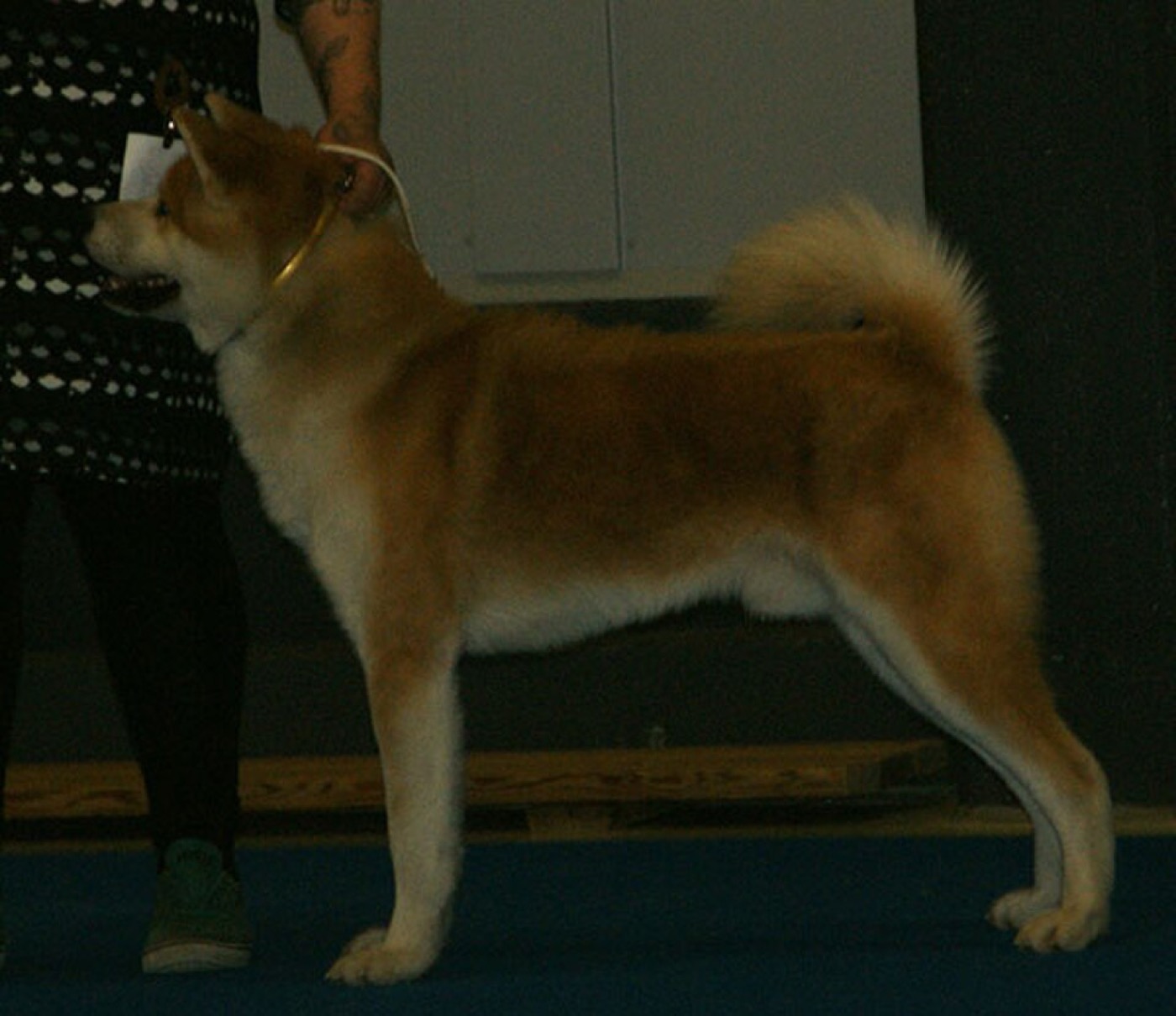
The Akita traces back to the Matagi Inu, a hunting dog used by traditional hunters in Japan’s mountainous Tōhoku region to track bear, wild boar, and Japanese serow in snow-covered terrain. The breed was officially declared a Japanese natural monument in 1931, when it was formally renamed the Akita Inu.
Photo: Canarian / Wikimedia Commons, CC BY-SA 4.0
| Origin | Height | Weight | Lifespan | Energy Level |
|---|---|---|---|---|
| Japan | Males 64-71 cm · Females 58-66 cm | Males 27-59 kg · Females 25-45 kg | ~11.4 years | Moderate to High |
Executive Summary
The Akita is dignified, territorial, and reserved with strangers — originally bred to track and subdue large game in snow-covered mountains, and later used as a guard dog by samurai and wealthy farmers. A well-trained Akita accepts non-threatening strangers, though the breed’s protective instincts run deep.
What Owning a Akita Involves
| With training & care | Without it |
|---|---|
| Dignified, loyal guardian bonded closely to its family | Aggression toward strangers or other dogs without socialization |
| Autoimmune disease awareness enables early diagnosis | Undiagnosed autoimmune conditions specific to the breed |
| Routine hip/elbow and thyroid screening | Undiagnosed hip dysplasia, elbow dysplasia, or hypothyroidism |
| Structured training channels natural guarding instinct | Territorial aggression without early, consistent training |
3 Real-World Scenarios
- An owner researching the breed’s real historical role: learns the Akita was declared a Japanese natural monument in 1931 in recognition of its unique hunting heritage tracking bear and wild boar in mountain terrain.
- A family wanting a loyal, protective guardian breed: picks the Akita for its documented territorial, reserved-with-strangers temperament, while committing to early socialization.
- A vet investigating unusual autoimmune symptoms: considers the Akita’s well-documented predisposition to specific autoimmune diseases like Vogt-Koyanagi-Harada syndrome, rare in most other breeds.
2 Akita Facts
1. The Akita is one of a small number of dog breeds ever officially declared a natural monument by a national government — Japan made this designation in 1931, cementing the breed’s cultural significance.
2. The Akita shows documented predisposition to a specific set of autoimmune diseases, including Vogt-Koyanagi-Harada syndrome, a condition rarely seen as a major concern in most other dog breeds.
🐾 Try It: What Breed Does Your Dog’s Description Match?
Click through real physical traits and see how close your dog’s description comes to a Akita or another breed.
🐾 What Breed Is My Dog? Click the traits you see
Try it instantly — no sign-up. Watch the match bar grow as you go.
For fun and general guidance only — not a substitute for a professional breed evaluation or DNA test. Photo credits shown above each result.
How the Akita Compares to Other Breeds We’ve Covered
| Breed | Origin | Male Weight | Energy Level | Guarding Instinct |
|---|---|---|---|---|
| Rottweiler | Germany | 50-60 kg | High | Very high |
| Doberman Pinscher | Germany (1880s) | 40-45 kg | Very high | Very high |
| German Shepherd | Germany (1899) | 30-40 kg | Very high | High |
| Beauceron | France (1587) | 30-45 kg | High | High |
| Golden Retriever | Scotland (1868) | 29-34 kg | High | Low |
| Labrador Retriever | England (1903) | 29-36 kg | High | Low |
| French Bulldog | France (1898) | 9-14 kg | Moderate | Low |
| Poodle (Standard) | Germany/France | 20-32 kg | High | Low |
| Bulldog | England (1875) | ~25 kg | Low | Low |
| Beagle | England (1830s) | 10-11 kg | High | Low |
| Dachshund | Germany (1700s) | 7-15 kg | Moderate | Moderate |
| Yorkshire Terrier | England (1870s) | ≤3.2 kg | Moderate | Low |
| Boxer | Germany (1895) | 30-32 kg | High | High |
| Siberian Husky | Russia (Chukchi) | 20-27 kg | Very high | Low |
| Great Dane | Germany (1878) | 54+ kg | Moderate | Moderate |
| Chihuahua | Mexico | 1-3 kg | High | Low |
| Pug | China | 6-8 kg | Low | Low |
| Border Collie | UK (1893) | 14-25 kg | Very high | Low |
| Australian Shepherd | USA | 16-32 kg | Very high | Moderate |
| Shih Tzu | Tibet/China | 4-7.5 kg | Moderate | Low |
| Cocker Spaniel | England | 13-14.5 kg | High | Low |
| Cavalier King Charles Spaniel | UK (1944) | 5.4-8 kg | Moderate | Low |
| Miniature Schnauzer | Germany | 4-8 kg | Moderate | Moderate |
| Pomeranian | Germany/Poland | 1.4-3.2 kg | High | Low |
| Shetland Sheepdog | Scotland (1909) | ~9-11 kg | High | Moderate |
| Bernese Mountain Dog | Switzerland (1912) | 36-55 kg | Moderate | Moderate |
| Newfoundland | Canada | 65-80 kg | Moderate | Low |
| Akita | Japan (1931) | 27-59 kg | Moderate | High |
| Alaskan Malamute | USA (Alaska) | 34-39 kg | Very high | Low |
| Bull Terrier | England | Unstandardized | High | Moderate |
| Staffordshire Bull Terrier | UK (1935) | 13-17 kg | High | Moderate |
| Weimaraner | Germany (1891) | 30-40 kg | Very high | Moderate |
| Basset Hound | France | 25-34 kg | Low | Low |
| Bichon Frise | France/Belgium | ~5 kg | Moderate | Low |
| Maltese | Italy | 3-4 kg | Moderate | Low |
Weight and origin data from published breed standards; energy/guarding levels are general working-breed characterizations, not clinical measurements. See the full breed index for filters by size and origin.
Nutrition and Exercise
Akitas need moderate to substantial daily exercise, retaining real stamina from their mountain-hunting heritage. Given the breed’s documented predisposition to autoimmune conditions and hypothyroidism, regular veterinary screening is an important part of long-term care.
10 FAQs
Where does the Akita come from?
How big does an Akita get?
What was the Akita originally bred for?
Is the Akita a natural monument in Japan?
Are Akitas aggressive?
What health problems are common in Akitas?
Are Akitas good family dogs?
How long do Akitas live?
Is an Akita good for a first-time owner?
What is the Matagi Inu?
🎥 5 Best YouTube Videos About the Akita
These videos are embedded directly using YouTube’s own official embed player, in compliance with YouTube’s Terms of Service — we don’t host, own, or claim any credit for this footage. All rights remain with each video’s original creator; click a channel name below to visit their YouTube channel.
AKITA 101! Everything You Need To Know About The American Akita! — by Will Atherton Canine Show
American Akita Dog 101 Everything you need to know — by Smart Dog Lover
Dogs 101 – Akita — by aundy111
American Akita Dogs 101 | Everything You Need To Know — by Doggy Pedia
Dogs 101 – AKITA – Top Dog Facts About the Akita — by Brooklyns Corner
Dog Breed Guide Index: Every Breed We’ve Covered, Filterable by Origin, Size, and Age
Alaskan Malamute: Complete Breed Guide to Temperament, Health, and Care
AI Dog Breed Photo Identifier: Upload a Photo, Get an Instant AI Match